
Portfolio
Finding huge wins for clinics & private practices hiding in plain sight.
- Built from experience, creating over 20,000 new inquiries every month.




Marketing Philosophy
When your marketing resources are aligned with the highest-impact activities, performance accelerates, consistently and measurably. Instead of spreading effort across every possible initiative, concentrating on the actions that deliver the largest incremental gains ensures stronger outcomes with fewer wasted cycles.
- Stronger performance from the same or fewer resources.
- Faster lift in the metrics that matter most.
- Better decision-making, backed by data instead of assumptions.
Review Recent Work
ChiroCare
Project:
- Website Funnel
Objectives:
- Increase inquiries.
- Reduce cost per inquiry.
Work:
Problems Solved:
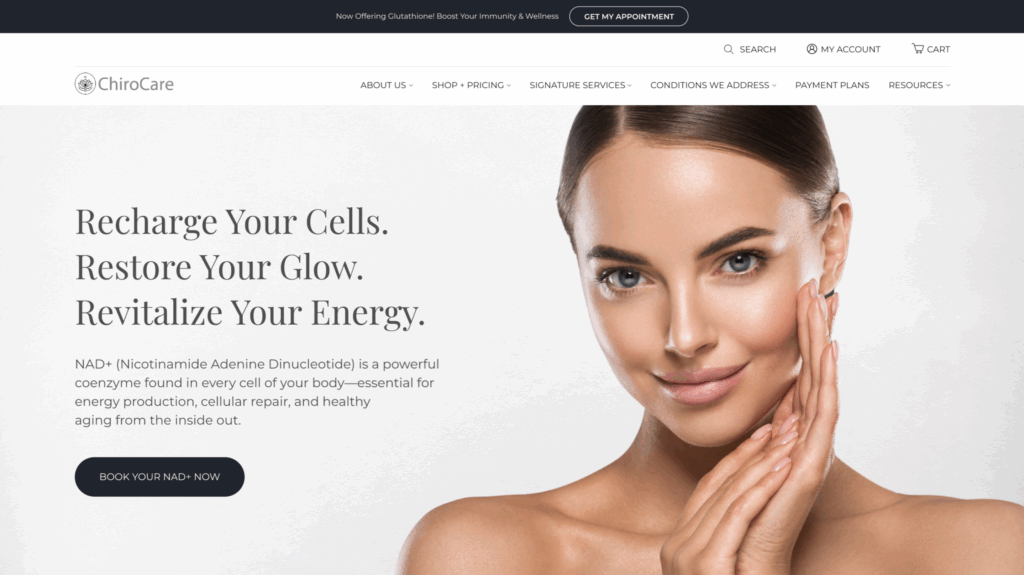
- When testimonials and social proof sit too low on the page, visitors miss the reassurance needed to move forward. Elevating them solves the credibility gap, making trust visible earlier, improving user comfort, and increasing the likelihood they continue exploring the offer.
- Uneven spacing, shifting text styles, and mismatched capitalization create visual friction that distracts visitors from the message. Resolving these inconsistencies solves the clarity issue, giving the page a clean, cohesive rhythm that feels more professional and easier to follow.
- Oversized product photos and unappealing visuals, like a syringe-focused shot, can trigger hesitation. Replacing them with more inviting, wellness-oriented images solves the aesthetic and emotional mismatch, helping the experience feel safer, calmer, and more aligned with the NAD+ benefits being offered.
- Different or unclear calls-to-action add unnecessary decision-making for visitors. Unifying all CTA buttons to “Book Your NAD+ Now” solves the directional problem, removing ambiguity, guiding users forward, and increasing conversion consistency across the page.
- Elements like the facts carousel feel out of place, and the layout lacks a cohesive flow. Improving structure, refining sections, and aligning the UX solves the engagement issue by creating a smoother, more intuitive experience that guides visitors from interest to action.
Progeny Psychiatric Clinic
Project:
- Website Funnel
Objectives:
- Increase inquiries.
- Reduce cost per inquiry.
Work:
Problems Solved:
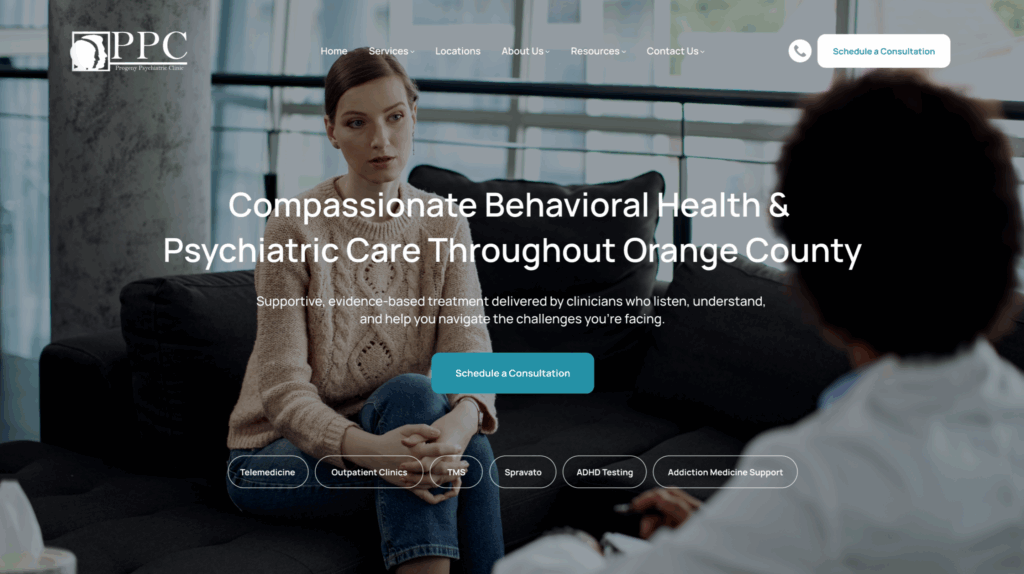
- When large sections of a page feel empty or disconnected, visitors naturally shift attention away from the content that matters. This solution reorganizes the layout to make every section purposeful, reducing visual noise and keeping users focused on the actions that drive conversion.
- Placing insurance badges, testimonials, and social proof too far down increases friction and forces users to hunt for reassurance. By moving trust indicators higher, the experience solves the credibility gap, helping visitors feel secure earlier, which increases engagement and reduces drop-off.
- An outdated design can unintentionally signal “this might not be the right provider.” Updating formatting, spacing, and structure solves the brand-perception problem by creating a modern, intuitive experience that aligns with what today’s users expect from a reputable mental-health or care-based service.
- Vague or generic copy makes it difficult for visitors to know, quickly, whether the service supports their exact needs. This solution sharpens audience identification and expands on the real pain points the target demographic experiences, instantly improving resonance, clarity, and connection.
- A lack of direction creates unnecessary decision fatigue. By moving a clear CTA, “Schedule a Consultation”, higher on the page, reducing friction, and guiding visitors forward, the experience solves the conversion-path problem. More clarity means more calls, more bookings, and more qualified patients moving into care.

Shine Psychiatry
Project:
- Seasonal Depression Webinar
Objectives:
- Increase inquiries.
- Reduce cost per inquiry.
- Educate audience.
Work:
- After: LINK
Problems Solved:
- Many people assume low mood, fatigue, or irritability are automatically “seasonal depression.” The webinar solves this by providing clear, clinician-led guidance that helps audiences understand whether symptoms align with Seasonal Affective Disorder or point to something else entirely such as burnout, anxiety, or unmet physiological needs.
- Consumers often rely on social media or anecdotal advice, which leads to confusion and incorrect assumptions. This session centralizes evidence-based education, reducing the noise and giving audiences trusted, actionable insight from a psychiatrist who can distinguish between overlapping conditions.
- Seasonal mood changes are a timely, widely relatable issue. The webinar solves the engagement challenge by connecting the topic to a moment of heightened audience need, making it easier for marketing teams to drive registrations, nurture leads, and deliver value-rich content that keeps people engaged.
- One of the biggest barriers in mental health marketing is helping people know when symptoms require professional care. This webinar solves that by outlining clear thresholds, red flags, and next steps, empowering viewers to make confident, informed decisions about their well-being.